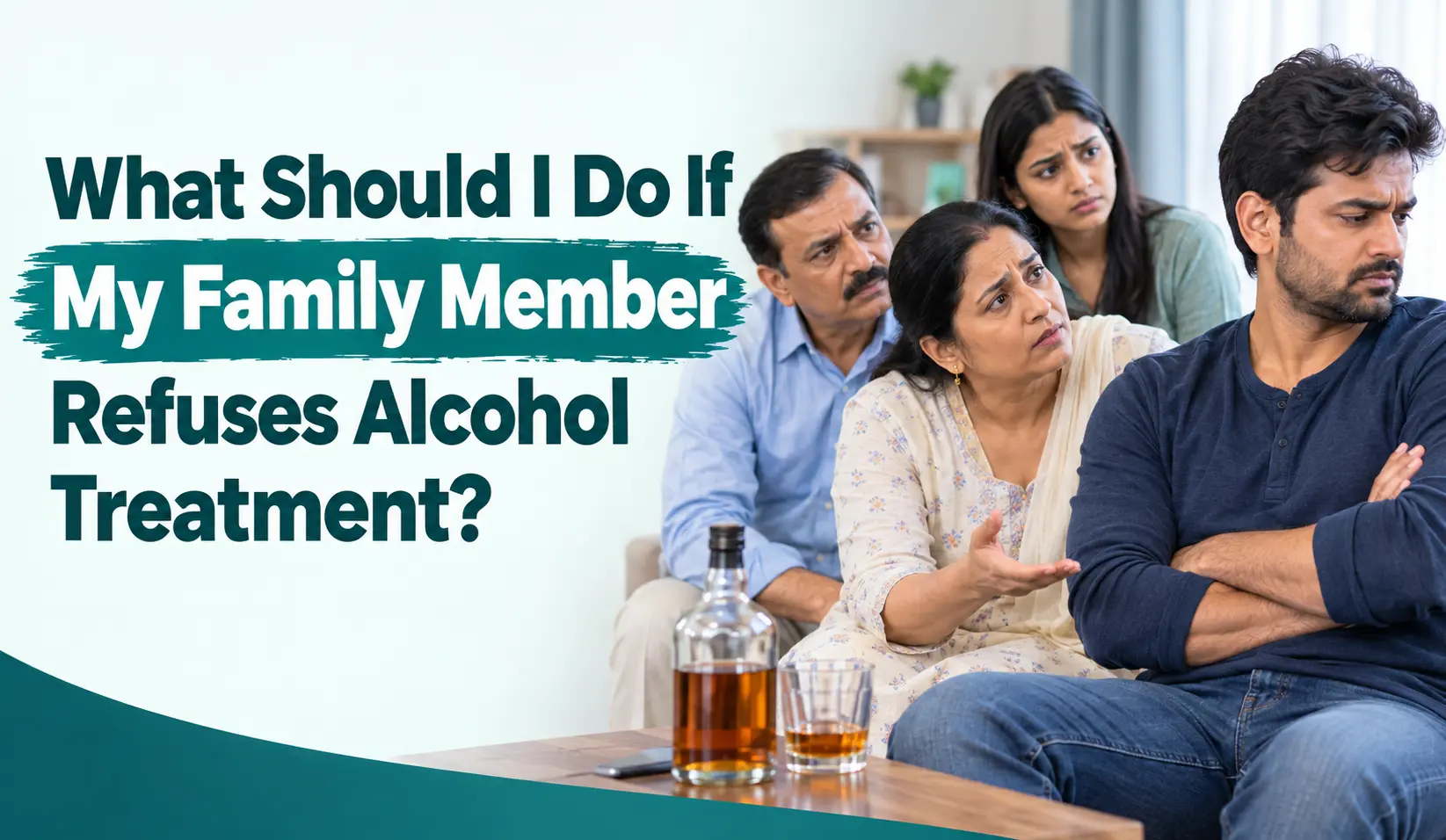
Watching someone you love struggle with alcohol addiction is hard enough. It becomes even harder when they refuse to get help. You see the damage. You see the warning signs. But every time you bring up treatment, you hit a wall of denial, anger, or silence.
If this sounds familiar, take a breath. You are not powerless here. There are real, practical steps you can take — even when your loved one isn’t ready to listen yet.
This guide walks you through exactly what to do when a family member refuses alcohol treatment, how to approach the conversation, and when it’s time to bring in professional support.
Why Do People Refuse Alcohol Treatment in the First Place?
Before you plan your next move, it helps to understand why your loved one is saying no. Refusal rarely means they don’t care about themselves or your family. It usually means something else is going on underneath.
Common reasons people resist treatment include:
- Denial — they genuinely don’t believe their drinking is a problem
- Fear of withdrawal — they’ve heard withdrawal is painful or dangerous
- Shame or stigma — they worry about being judged by family or society
- Fear of losing control — treatment can feel like giving up independence
- Past bad experiences — a previous attempt at treatment didn’t go well
- Financial worries — concern about cost or time away from work
Understanding the “why” helps you respond with empathy instead of frustration. It also helps you pick the right approach instead of repeating the same argument that hasn’t worked so far.
Manage Your Own Emotions First
It’s easy to feel angry, exhausted, or hopeless when someone refuses help. But reacting from that place rarely changes their mind — it often pushes them further away.
Before your next conversation, try to:
- Separate the person from the addiction. The disease is talking, not always them.
- Avoid confrontations during moments of intoxication or high stress.
- Give yourself permission to feel frustrated, but don’t let that frustration drive the conversation.
This isn’t about suppressing your emotions. It’s about choosing the right moment and tone so your message actually lands.
Choose the Right Time and Approach
Timing changes everything. A conversation started during an argument or right after a drinking episode almost never works.
Instead:
- Talk when they are sober and calm, ideally in the morning
- Pick a private, comfortable setting — not in front of extended family or guests
- Use “I” statements instead of accusations. Say “I feel worried when...” instead of “You always...”
- Stick to specific examples rather than generalizations
- Avoid lecturing. One honest, caring conversation is more effective than ten rushed ones
Small changes in how you start the conversation can make a big difference in how it’s received.
Set Clear, Loving Boundaries
Boundaries are not punishments. They protect your own wellbeing and, over time, they often become the push someone needs to accept help.
Examples of healthy boundaries include:
- Not covering up for their behaviour at work or with relatives
- Not giving money that may be used to buy alcohol
- Not engaging in conversations while they are drunk
- Being clear about consequences, and following through calmly if they are crossed
The goal isn’t to control them. It’s to stop enabling the addiction while staying emotionally available.
Try a Structured Family Intervention
If one-on-one conversations haven’t worked, a structured intervention can be more effective. This involves close family members and, ideally, a trained counsellor coming together to express concern in a calm, non-judgmental way.
A good intervention usually includes:
- A small group of people the person trusts and respects
- Specific examples of how the addiction has affected the family
- A clear, compassionate request to seek treatment
- A pre-arranged plan for the next step, such as an appointment already booked
Interventions work best when they are planned carefully rather than done spontaneously in the heat of an argument. A professional counsellor can guide the family through this process so it stays supportive rather than confrontational.
Educate Yourself About Alcohol Addiction
Many families try to reason with their loved one using willpower-based arguments — “just stop” or “think about us.” But alcohol dependence is a medical condition, not a lack of discipline.
Understanding withdrawal symptoms, the stages of addiction, and the recovery process helps you:
- Respond with more patience
- Recognize when the situation is becoming medically urgent
- Explain treatment options more accurately when your loved one does ask questions
This knowledge also helps you avoid common mistakes, like trying to manage detox at home without medical supervision, which can be dangerous in cases of heavy, long-term drinking.
Involve a Professional Counsellor Early
You don’t have to wait until your family member agrees to treatment before you reach out to a counsellor. In fact, getting guidance early often helps you handle the refusal itself more effectively.
A professional can help you:
- Understand what’s driving the resistance
- Plan a family intervention properly
- Identify signs of a medical emergency
- Guide the family through the emotional toll of living with addiction
Family counselling, even without the person struggling with alcohol present, often creates the shift that eventually leads them to agree to treatment.
Watch for Warning Signs That Need Immediate Attention
While you work on persuasion and boundaries, stay alert for signs that require urgent medical help, regardless of whether your family member agrees to it:
- Shaking, sweating, or severe anxiety when not drinking
- Seizures or hallucinations
- Confusion or extreme disorientation
- Signs of liver damage, such as yellowing skin or eyes
- Talk of self-harm or hopelessness
If you notice any of these, don’t wait for willingness. Seek emergency medical care immediately, as alcohol withdrawal can become life-threatening without supervision.
Know That “No” Today Doesn’t Mean “No” Forever
One of the hardest parts of this journey is accepting that change often takes time. Many people who eventually enter treatment refused it multiple times first. Your consistency, boundaries, and calm presence matter even when it doesn’t feel like progress.
Keep the door open. Let your loved one know that help will be there whenever they’re ready — without judgment, and without giving up on them in the meantime.
When Should You Reach Out to a Rehabilitation Centre?
You don’t need to wait for a crisis to make that first call. Reaching out to a treatment centre early — even just to ask questions or get guidance — can help your family prepare, plan an intervention, and understand what the road to recovery actually looks like.
At Nischay Hospital, families dealing with a loved one’s refusal to seek treatment can speak with experienced counsellors who specialize in addiction and family guidance. As a trusted Nasha Mukti Kendra in Lucknow, the team works closely with families — not just patients — to plan the right approach, support safe detox when needed, and guide the person toward lasting recovery at the right time.
If you’re unsure where to start, a short conversation with a counsellor can bring clarity when everything else feels uncertain.
A Short Checklist for Families
If you’re in the middle of this situation right now, here’s a simple checklist to come back to:
- Stay calm and avoid confrontations during intoxication
- Talk during calm, sober moments
- Set and maintain healthy boundaries
- Avoid enabling behaviours like covering up or giving money
- Consider a planned, guided intervention
- Reach out to a counsellor or treatment centre for support, even before your loved one agrees
- Watch for medical emergencies and act immediately if they occur
- Take care of your own mental health through this process
You don’t have to carry this alone, and you don’t have to get it perfect. Small, consistent steps often matter more than one big confrontation.
FAQs

Binge Drinking and Your Health: Effects on Life & Well-Being
Binge Drinking and Your Health: How It Impacts Life and Well-Being Why Binge Drinking Is...
Read More
When You Feel Like Giving Up: Understanding Suicidal Thoughts & The Path to Recovery
When You Feel Like Giving Up: Understanding Suicidal Thoughts & The Path to Recovery Suicidal...
Read More
Understanding Social Anxiety Disorder: Causes, Symptoms & Effective Treatments
Understanding Social Anxiety Disorder: Causes, Symptoms & Effective Treatments What Is Social Anxiety Disorder? Social...
Read More
Pharmacological Treatment
Pharmacological Treatment Pharmacological treatment is one of the most essential components of modern healthcare. It...
Read More